
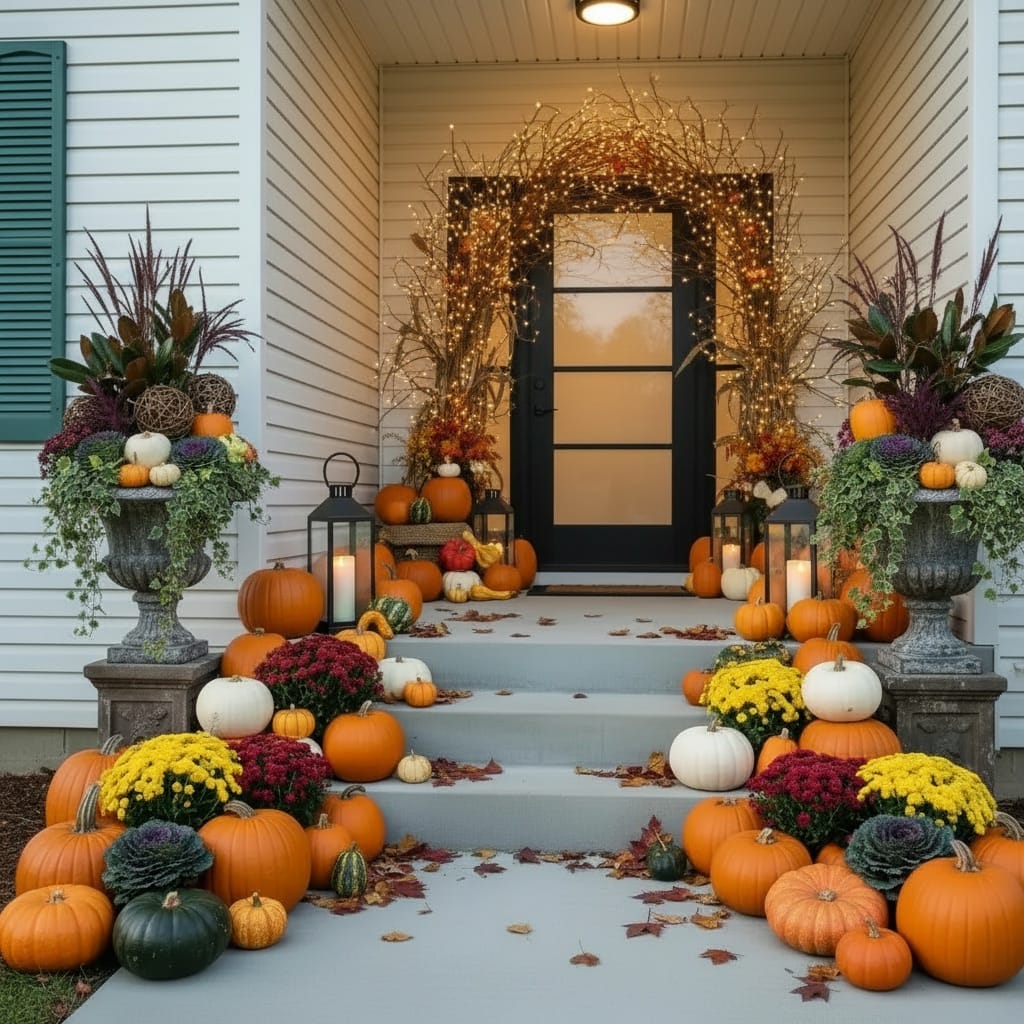
The swap from fall to winter is the one seasonal changeover in Michigan with a genuine deadline. Every other transition is a matter of taste. This one is decided by the ground: once the soil inside a container freezes solid, the easiest way to build a winter display stops being available.
That single fact sets the whole schedule, and it explains why professional crews across Metro Detroit are booked into the same short stretch of November every year.
THE MICHIGAN CALENDAR, IN PLAIN TERMS
Metro Detroit sits in USDA zones 5b to 6a. Three weather events matter to a porch pot, and they arrive in this order.
- First frost. Sometime in October, usually on a clear, calm night. Frost can form even when the air temperature is a few degrees above freezing. It takes out the tender plants and leaves everything else alone.
- First hard freeze. Later in the fall. A hard freeze is generally defined as 28 degrees or colder, held long enough to freeze more than the surface. This is the one that ends fall material.
- Ground and container freeze. Some days or weeks after that, depending on the year. Potting soil in an exposed container freezes well before garden beds do, because a pot has cold air on every side.
The workable swap window sits between the second event and the third. Fall material is finished, and the soil is still soft enough to work with.
WHAT THE FIRST HARD FREEZE DOES TO FALL MATERIAL
A frost is a warning. A hard freeze is the end of the fall display, and it does not happen gradually.
| Material | What happens |
|---|---|
| Mums and asters | Open blooms brown and shrivel. The plant stops being the focal point. |
| Ornamental grasses | Tender types are dead, but plumes hold their shape and can stay in place. |
| Pumpkins and gourds | Freeze, thaw, then collapse into soft spots and mush. Better removed before that. |
| Hay bales | Take on water, then freeze into a heavy, misshapen block. |
| Ornamental kale and cabbage | Keeps going. Often still presentable well into winter. |
| Corn stalks, dried elements | Unaffected. Can carry straight into a winter display. |
The practical read is that pumpkins set the deadline on the front end. A frozen and thawed pumpkin becomes a mess to clean up and an invitation to wildlife, so most fall displays should come out shortly after the first hard freeze rather than waiting for December.
WHY CUT EVERGREEN BEHAVES NOTHING LIKE A LIVING PLANT
This is the part that surprises people, and it is the reason winter displays in a cold climate are made of cut material rather than plants.
A living plant in a container is killed by cold at the roots. Roots in a pot have no soil mass around them and no insulation, so a hard freeze reaches them from every direction. That is why a shrub rated perfectly hardy in a Michigan garden bed can still die in a pot on the same property.
A cut evergreen bough has no roots to lose. Nothing about freezing damages it. If anything the cold helps: low temperatures slow the loss of moisture from the needles, which is what actually ends the life of cut greens. The same fraser fir bough that dries out and drops needles in a heated living room in three weeks holds its color outdoors in Michigan for months.
WHY THE WINDOW LANDS JUST BEFORE THANKSGIVING
Put the two halves together and the timing writes itself. The fall display should come out shortly after the first hard freeze. The winter display can go in the same day, and gains nothing by waiting. And Thanksgiving is the first day of the season when most Michigan households have people walking up to the front door.
So the target is the stretch before Thanksgiving, generally the two weeks leading up to it. That timing does three things at once: it clears the fall material before it turns, it gets the greens in while container soil is still workable, and it has the porch finished before the first guests arrive.
There is one more reason not to leave it later. While the potting soil is still soft, stems can be pushed straight down into it and set at whatever angle the design needs. Water the container once after the install and the soil freezes around those stems, locking the whole arrangement in place for the winter. Wind stops being a problem. Wait until the soil is frozen solid and that method is off the table.
WHAT COMES OUT AND WHAT CAN STAY
A swap is not a teardown. In most cases the container, the soil and part of the structure carry over.
- Out: spent mums and asters, tender annuals, pumpkins, gourds and hay bales. Fall material has weight and volume, so hauling and disposal is a real part of the job rather than an afterthought.
- Stays: the container itself and the soil in it. Winter greens are set into that soil, so there is no reason to empty it.
- Optional: corn stalks, dried elements and healthy ornamental kale can carry into the winter arrangement. Kale in particular often looks good under a collar of evergreen for weeks longer.
What replaces the fall material is covered in winter porch pots in Michigan, which walks through the evergreens, stems and berries that hold up through a hard freeze climate.
WHY BOOKING AHEAD ACTUALLY MATTERS
Seasonal decorating has an unusually tight supply picture in November, and it is worth understanding rather than taking on faith.
Everyone wants the same two weeks. The reasoning above is not a trade secret, so every household and business in Metro Detroit that decorates is aiming at the same stretch before Thanksgiving. Meanwhile the days are short, installs happen in daylight, and a crew loses hours to weather it cannot control. Fresh-cut greens also arrive on delivery schedules, so the material for a given week is committed in advance rather than pulled off a shelf.
None of that is a countdown clock. It just means that booking early is how you get to choose your date instead of taking what is left, and it is why we start conversations about winter installs well before the leaves are down.
COMMON QUESTIONS ABOUT TIMING THE SWAP
When should I take down fall planters in Michigan?
Shortly after the first hard freeze, which typically lands in November. The deciding factor is the pumpkins: once they have frozen and thawed they start collapsing, and cleaning up a collapsed pumpkin is far worse than removing an intact one. Mums that have browned are the other signal.
Is it too early to put out winter greenery before Thanksgiving?
No, and before Thanksgiving is the ideal time. Cut evergreen does not wilt, flop or fade in cold weather, so an early install looks the same in January as a late one. Installing early buys you a workable container, your choice of date, and a finished porch for holiday guests.
What if I wait until December?
It can still be done, but the container soil is usually frozen by then, which rules out setting stems directly into it. The workarounds are heavier and slower, and the best install dates are long gone. December is the month to add lighting and refresh what is already in place, not the month to start.
Do I need new containers for the winter display?
Almost never. The same pots carry through, which is exactly how a planter subscription works: four changeovers a year in the containers you already have. The one exception is terracotta or glazed ceramic, which crack in Michigan freeze-thaw cycles and are better emptied and stored.
Can one visit handle both the removal and the install?
Yes, and it is the efficient way to do it. One trip covers pulling the fall material, hauling it away, and setting the winter arrangement in the same containers. Splitting it into two visits doubles the travel and the labor, which is one of the cost drivers explained in what outdoor holiday decorating costs.